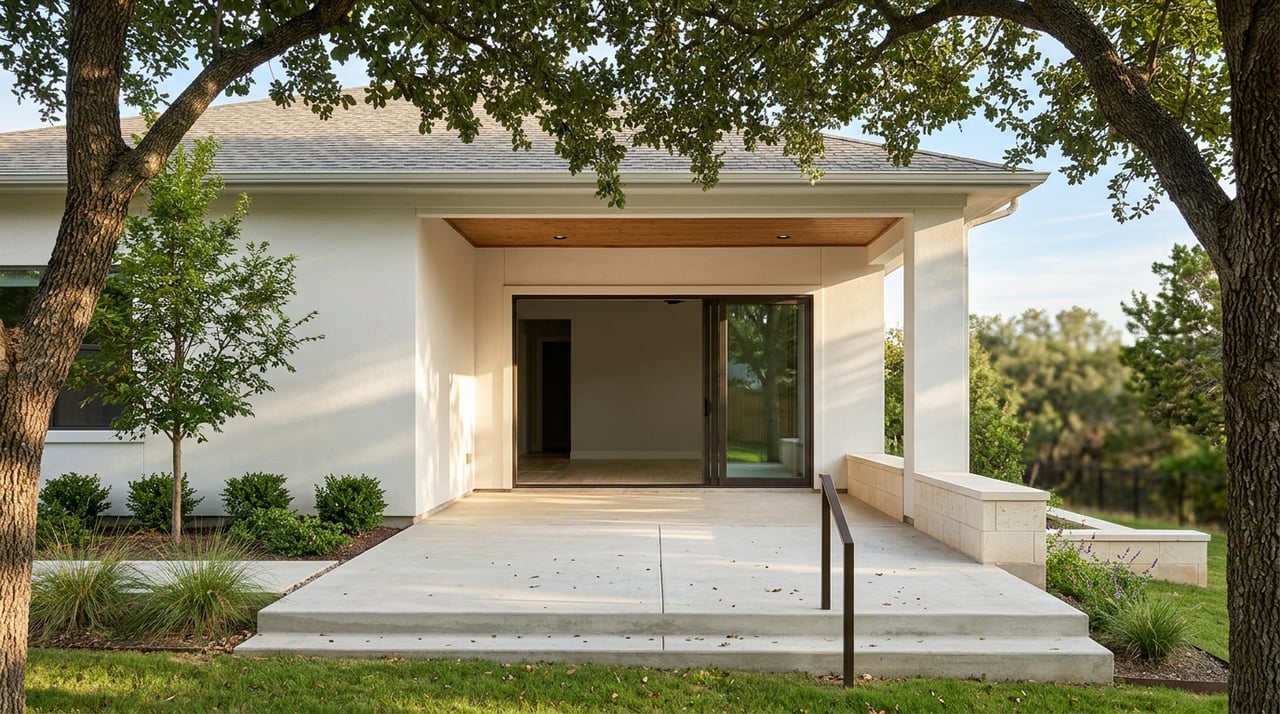
If you are searching for luxury in West Austin, West Lake Hills often stands apart for one simple reason: the lot matters as much as the house. In a city of steep hills, mature trees, and limited inventory, your daily experience can be shaped by slope, privacy, driveway layout, and view lines long before you think about finishes or square footage. This guide will help you understand how West Lake Hills luxury homes work in real life, from lot patterns and views to outdoor living and everyday routines. Let’s dive in.
Why West Lake Hills Feels Different
West Lake Hills is a small incorporated city on the west bank of Lake Austin and the eastern edge of the Balcones Escarpment. According to the city, it covers about 2,560 acres, or roughly 4 square miles, and includes around 1,000 homes and 200 businesses. That smaller scale helps explain why the area feels tucked away while still staying close to central Austin.
The terrain is a big part of the story. City planning documents describe West Lake Hills as very hilly, with elevations ranging from about 500 feet near the lake to more than 900 feet on hilltops. For you as a buyer, that means homes here are often defined by grade, tree cover, drainage, privacy, and how the structure sits on the land.
West Lake Hills Lots Shape the Lifestyle
In many neighborhoods, buyers start with the home itself. In West Lake Hills, the lot often comes first. That is because site conditions can affect everything from where the house sits to how much usable outdoor space you actually enjoy.
The city’s planning framework also reinforces that pattern. Area 1, which reflects the core residential pattern, is built around single-family detached homes on minimum one-acre lots with careful site planning and reduced visibility. Area 2 allows clustered single-family homes on larger tracts, averaging no more than two units per acre, with lots at least four acres in size.
What one-acre zoning means
Current city code sets R-1 minimum lot size at one acre, with minimum dimensions of 150 feet by 150 feet. On lots at or above half an acre, front setbacks are 50 feet and impervious cover is capped at 25%. Those rules can have a real effect on how much flat yard, parking area, patio space, or pool area fits comfortably on the site.
Subdivision rules add another layer. At least 50% of a residential lot must sit on land with a natural slope under 30%. In practical terms, that means two one-acre properties can feel very different depending on how much of the site is buildable and how much is steep hillside.
What to look at beyond square footage
When you tour homes in West Lake Hills, it helps to pay close attention to the site plan, not just the interiors. A beautiful home on paper may live very differently based on access and topography.
Here are a few details worth comparing:
- Driveway length and slope
- Amount of retaining or cut-and-fill work
- Tree coverage and preserved natural screening
- Usable yard area after setbacks
- Drainage flow across the lot
- How much privacy the topography creates
- Whether outdoor spaces feel integrated or separated by grade changes
In this market, site quality can carry as much weight as design and finish level.
View Homes vs Private Wooded Homes
One of the most recognizable West Lake Hills tradeoffs is the choice between wider views and deeper privacy. The city’s planning language encourages preserving knolls, ridges, and roadside tree buffers where possible, while siting homes to minimize visibility. That planning approach helps create two common experiences: elevated homes with broad outlooks, and more concealed homes tucked into a canopy of trees.
Neither is automatically better. It depends on how you want to live. Some buyers want long Hill Country or skyline-facing views and are comfortable with more sun exposure and more visible siting. Others prefer a quieter setting where the house feels hidden from the street and wrapped in mature landscaping.
How the streetscape stays more discreet
The city’s parking and garage rules also shape the look of many homes. Unenclosed parking must be at the rear, garage doors should face side or rear yard property lines, and garages cannot extend beyond the street-facing elevation of the home. The result is often a more composed, landscape-forward streetscape instead of a garage-dominant frontage.
For you, that can make street appeal feel more natural and less uniform. It also means that arrival, parking, and access should be part of your walk-through checklist, especially on hillside lots.
Home Styles You Will See
West Lake Hills has a style mix that reflects both its history and its ongoing luxury appeal. A Travis County historic resources survey notes that the hills west of Austin, including West Lake Hills, were strongly shaped by postwar suburban growth, with many 1950s and 1960s Ranch and Modern Ranch homes. Those homes often feature long, low profiles and large windows oriented toward Hill Country views.
That earlier architecture still influences today’s market. Legacy ranch homes remain part of the housing stock, often on large oak-filled lots. At the same time, more recent inventory includes renovated modern homes, soft contemporary hilltop residences, and rebuilt or custom properties designed to respond to the terrain.
Why the architecture often feels site-specific
The city encourages natural materials, unobtrusive colors, low building heights, and vegetation used as screening. Combined with slope constraints and impervious-cover limits, those standards tend to support homes that work with the land instead of overpowering it.
That is one reason outdoor living in West Lake Hills often feels layered and intentional. Instead of broad flattened lots, you may see terraces, decks, pools, patios, and native landscaping arranged to follow the grade. When done well, the result feels connected to the hillside rather than imposed on it.
Outdoor Living in Daily Practice
Luxury outdoor living here is not only about looks. It is also about function. On a hillside lot, the best outdoor spaces balance view, shade, privacy, and ease of movement between indoor and outdoor areas.
If you are comparing homes, consider how outdoor spaces will feel during normal routines, not just during showings. A dramatic terrace may be stunning, but a more usable patio off the kitchen or living room may support daily life better. In West Lake Hills, the most successful homes often pair strong architecture with outdoor spaces that respect the grade and the tree canopy.
What Everyday Life Looks Like
West Lake Hills daily life is shaped by a mostly residential street network and a small, low-intensity service corridor. The city’s master plan identifies Bee Cave Road, Westbank Drive, Westlake Drive, and Redbud Trail as the main thoroughfares. Planning policy also favors local-serving uses and seeks to avoid adding unnecessary congestion, particularly along Bee Cave Road.
That translates to a lifestyle that often feels residential first. You are not moving here for heavy commercial activity. You are moving here for a setting that stays close to Austin while maintaining a quieter, more neighborhood-oriented pattern.
Nearby outdoor access
Outdoor access is one of the area’s strongest lifestyle advantages. Nearby Barton Creek Greenbelt access points include the 360 Trailhead, the Mopac/Gaines trailhead, and Trail’s End at Camp Craft Road. Zilker Metropolitan Park offers Barton Springs Pool, the Zilker Botanical Garden, and broader trail access.
For water access, public points along Lake Austin include the Loop 360 bridge area, Emma Long Park, Mary Quinlan Park, and Fritz Hughes Park. Wild Basin Wilderness Preserve also offers almost three miles of trails and daily hiking access. If your ideal routine includes time outside, West Lake Hills places you near several of Austin’s best-known natural amenities.
Ownership on the Hillside
The same features that make West Lake Hills beautiful also require practical attention. Hillside ownership tends to involve more awareness around drainage, erosion, and wildfire readiness. The city’s development materials include a drainage manual focused on stormwater, erosion control, and water quality facilities.
The city also encourages residents to sign up for Warn Central Texas for wildfire, severe weather, and evacuation alerts. In a wooded hill-country setting with narrow streets, emergency awareness and brush management become part of normal home stewardship. For many buyers, that is not a drawback, but it is an important part of understanding the full ownership picture.
West Lake Hills Market Context
West Lake Hills remains firmly in the upper-luxury tier. Zillow estimated the average home value at $2,093,317 as of May 31, 2026. Redfin reported a median sale price of $2,208,678 over the prior three months, with a median 62 days on market.
Inventory also appears limited. Zillow showed only 21 listings at that point. In a market with that level of scarcity, buyers often need to evaluate not only what a home is today, but also the long-term value of the lot, the setting, and the overall site potential.
What Smart Buyers Compare
If you are weighing West Lake Hills against other westside luxury neighborhoods, the key differences often come down to topography and setting. Here, lot slope, view orientation, privacy, and the condition of the existing home can matter more than headline square footage alone.
A smart comparison usually includes these questions:
- Is the home a legacy property, a renovation candidate, or a newer custom build?
- How usable is the lot today?
- Does the site favor broad views, privacy, or a balance of both?
- How much ongoing maintenance may the hillside setting require?
- Does the outdoor living layout fit the way you actually spend time at home?
In West Lake Hills, the lot is often the story before the house is. Knowing how to read that story can help you buy with more confidence.
If you want a more private, property-specific read on West Lake Hills luxury homes, Bridget Ramey offers concierge buyer and seller guidance grounded in deep West Austin market knowledge and a highly tailored approach.
FAQs
What makes West Lake Hills luxury homes different from other West Austin homes?
- West Lake Hills stands out for its steep topography, one-acre residential lot pattern, mature tree cover, limited inventory, and the way lot siting, privacy, and views shape daily life.
What should you look for in a West Lake Hills lot?
- Focus on slope, usable land area, driveway access, drainage, tree preservation, privacy, and how setbacks and impervious-cover limits affect outdoor living space.
Are most West Lake Hills homes on large lots?
- Yes. In the city’s R-1 zoning, minimum lot size is one acre, and Area 1 planning is centered on single-family detached homes on one-acre lots.
What home styles are common in West Lake Hills?
- You will commonly see Ranch and Modern Ranch influences from the 1950s and 1960s, along with renovated modern homes, soft contemporary designs, and newer custom builds.
What is daily life like in West Lake Hills?
- Daily life is mostly residential in feel, with access to local-serving businesses, major westside roads, nearby trail systems, Lake Austin access points, and well-known outdoor destinations like Zilker and Wild Basin.
What is the recent price range context for West Lake Hills homes?
- Recent market context shows an estimated average home value of $2,093,317 and a median sale price of $2,208,678, with limited active inventory and a median 62 days on market.