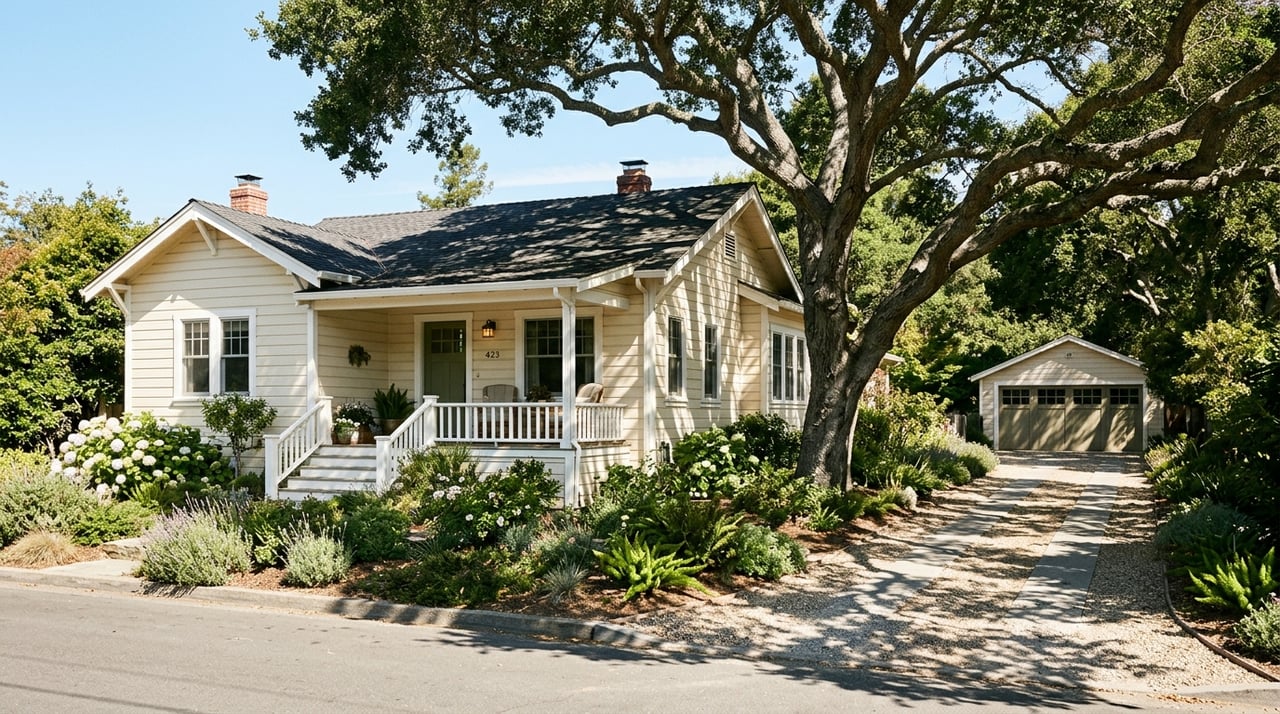
Wondering why one Travis Heights cottage trades in the high-$800,000s while another home a few blocks away pushes far higher? In this neighborhood, pricing is rarely just about square footage. If you are buying or selling in Travis Heights, understanding how architecture, lot shape, slope, views, and historic review all work together can help you read value more clearly. Let’s dive in.
Why Travis Heights Prices Vary So Much
Travis Heights is not a uniform neighborhood with repeating lots and lookalike homes. The Travis Heights-Fairview Park historic district developed in layers, beginning with Swisher’s Addition in 1877, Fairview Park in 1886, and Travis Heights in 1913.
Its roughly 353 acres were shaped by irregular terrain, including bluffs, creeks, ravines, wooded hillsides, mature trees, and parkland. That landscape created streets, lots, and homesites with very different use patterns, which still affects value today.
In Fairview Park, large irregular lots and hilly land helped create homesites with views and more varied settings. In Travis Heights, curving streets mixed with more traditional grid streets, and lot sizes and price points were intentionally varied from the start.
That means two homes with similar bedroom counts can sit on very different value foundations. In Travis Heights, the lot and the setting often matter just as much as the home itself.
How Home Style Shapes Pricing
Architecture is one of the clearest value signals in Travis Heights. The National Register nomination for the district identifies a wide range of styles, including Queen Anne, Folk Victorian, Craftsman, Tudor, Colonial, Spanish Revival, Minimal Traditional, Ranch, Contemporary, and more.
For most buyers and sellers, it helps to think about the neighborhood in three broad housing tiers. You will generally see early bungalows and cottages, postwar Minimal Traditional or Ranch-era homes, and newer infill or reconstructed modern homes.
Early Bungalows and Cottages
These homes often carry strong appeal because they reflect the neighborhood’s early character. Buyers may place a premium on original details, preservation quality, and how authentically the home fits the streetscape.
At the same time, not every bungalow is valued the same way. A smaller historic home with strong originality on a better lot can compete with a larger home on a less useful parcel.
Postwar Homes
Minimal Traditional and Ranch-era homes often sit in a middle ground. They may appeal to buyers looking for a simpler footprint, renovation opportunity, or a different entry point into the neighborhood.
Value here often depends on whether the home has been updated well and how flexible the lot is. In Travis Heights, a modest house on a strong lot can attract serious interest.
Newer Infill and Rebuilt Homes
Newer construction often trades in a different pricing tier, especially when it captures views, privacy, or improved parking and access. Modern homes on premium hillside or corner sites can command a notable premium over older cottages nearby.
That does not mean newer is always better. In this neighborhood, buyers also weigh whether the house fits the site and the street context in a thoughtful way.
Why Lot Shape Matters So Much
In many neighborhoods, lot size gets most of the attention. In Travis Heights, lot shape can matter just as much.
Because the neighborhood developed across irregular terrain, parcels vary widely in frontage, depth, slope, and usability. A wide lot, a deep lot, a corner position, or a lot with easier access can all change how a property functions and what buyers are willing to pay.
Wider Frontage Can Add Flexibility
A wider lot can create more breathing room between homes and more options for expansion or site planning. One Travis Heights Boulevard cottage was marketed on a 75-foot-wide lot and a half with treetop and potential downtown views, plus room for expansion.
That kind of frontage is not just a visual advantage. It can also affect how buyers think about future use and long-term value.
Corner Lots Can Trade at a Premium
Corner lots often stand out because they can offer added openness, alternate access patterns, and a stronger site presence. In Travis Heights, one 1930 home on Travis Heights Boulevard highlighted its double corner lot of nearly one-third of an acre.
That combination of size and position can elevate a property well beyond what the house alone might suggest. In a neighborhood with irregular parcels, corner placement can be especially meaningful.
Deep Lots Can Expand Utility
Deep lots may create room for detached spaces, rear parking, work areas, or future additions, depending on the property and applicable rules. A 1932 home on Kenwood Avenue sold with a deep lot, alley access, a detached workshop, and a study.
For buyers, that can make a smaller main house feel more functional. For sellers, those lot features can help explain why their property deserves closer comparison to homes beyond simple square-foot metrics.
Slope, Elevation, and Views Often Move Value
Travis Heights sits on land that rises and falls in ways that shape pricing block by block. Some parcels are elevated or on hillsides with treetop, skyline, or city views, while others are flatter and less dramatic.
That variation changes yard usability, privacy, view corridors, and the overall feel of the homesite. It also helps explain why a smaller home on a premium lot may outperform a larger home on a less compelling parcel.
Recent listings repeatedly highlight views as a major selling point. Examples include treetop and potential downtown views on Travis Heights Boulevard, city views on Alta Vista, and hillside or corner homesites on Kenwood and Alta Vista with skyline or treetop outlooks.
If you are evaluating value in Travis Heights, do not treat all lots as interchangeable. Elevation and setting can create a very real pricing difference.
Alley Access Is More Important Than It Sounds
Alley access is one of the recurring lot features that can influence pricing in Travis Heights. It can preserve the front streetscape while making rear parking, garages, workshops, or guest structures more feasible.
In recent examples, alley access appeared alongside a 1-car garage, a detached workshop, a 2-car garage with a detached studio or garage apartment, and easier parking and entry for a modern home. Those are practical features buyers notice quickly.
In a historic neighborhood, parking and access can be a bigger deal than many buyers expect. When a home offers alley access, it often improves day-to-day function without changing the front-facing character of the property.
Historic Review Can Affect Pricing Too
Historic status is another piece of the Travis Heights pricing puzzle. According to the City of Austin, if a property is a historic landmark or a contributing property in a historic district or National Register district, a historic review application is required for exterior alterations, additions, permanent site work, signs, and stand-alone new construction.
The city also directs National Register districts to use its historic design standards. In practical terms, renovation flexibility and redevelopment potential can influence what a buyer is willing to pay.
For some buyers, that review framework supports the neighborhood’s long-term character and helps protect streetscape consistency. For others, it can affect how they evaluate timelines, design options, and future project scope.
That is why pricing in Travis Heights often reflects more than the home you see today. It can also reflect what the site may, or may not, allow tomorrow.
Real Examples of the Price Spread
A few recent examples help show how broad the pricing range can be in Travis Heights.
- 1801 Travis Heights Blvd was listed in February 2026 at $875,000 as a 3-bedroom, 1-bath bungalow on a corner lot with alley access, a 1-car garage, and original hardwoods.
- 1409 Alta Vista Ave was listed at $825,000 and estimated at $911,351, with a roughly 6,969-square-foot lot, city views, and rebuild potential.
- 1709 Travis Heights Blvd sold for $1.895 million as a 2020 cottage-style home with alley access, a 2-car garage, and a detached studio or garage apartment.
Taken together, these examples show a meaningful spread between compact historic homes in the high-$800,000s and newer or more utility-rich homes near or above $1.8 million. The common thread is that pricing is often driven by the lot and setting as much as by finishes or age.
What Buyers Should Watch Closely
If you are shopping in Travis Heights, it helps to look past surface charm. Two homes may look similar online but offer very different long-term value.
Pay close attention to:
- Lot frontage and depth
- Corner or interior positioning
- Slope and yard usability
- Treetop, skyline, or city views
- Alley access and parking layout
- Preservation quality and architectural integrity
- Historic review implications for future changes
In this neighborhood, the smartest buying decisions usually come from understanding the full property, not just the house.
What Sellers Should Highlight
If you are preparing to sell in Travis Heights, your pricing strategy should tell the full story of the site. Buyers here often respond to details that are easy to miss in a generic listing approach.
That includes architectural provenance, originality, lot width, corner position, alley access, detached improvements, elevation, and view potential. In a neighborhood this nuanced, careful positioning matters.
For distinctive Austin properties, a more tailored advisory approach can make a real difference in how value is understood. That is especially true when the home’s strongest assets are tied to site character, not just interior updates.
If you are considering a move and want a more strategic read on pricing, neighborhood context, and buyer positioning, Bridget Ramey offers a private consultation with a polished, concierge-level approach.
FAQs
Why do two Travis Heights homes with similar size have different prices?
- Travis Heights developed in layers across irregular terrain, so lot size, shape, slope, access, views, architecture, and historic context can all affect value alongside square footage.
Does alley access increase Travis Heights home value?
- It often can, because recent neighborhood examples tie alley access to rear parking, garages, workshops, guest structures, and easier entry while preserving the front streetscape.
Do views affect Travis Heights pricing?
- Yes. Treetop, skyline, downtown, and city-view lots are repeatedly highlighted in recent listings as premium features.
Does historic status matter for Travis Heights homes?
- Yes. The City of Austin requires historic review for many exterior changes and site work on certain historic properties, which can influence renovation flexibility and redevelopment potential.
Which Travis Heights homes tend to command premiums?
- Homes with a strong mix of preserved character, usable lot geometry, elevation or views, and parking or access advantages often stand out in pricing.