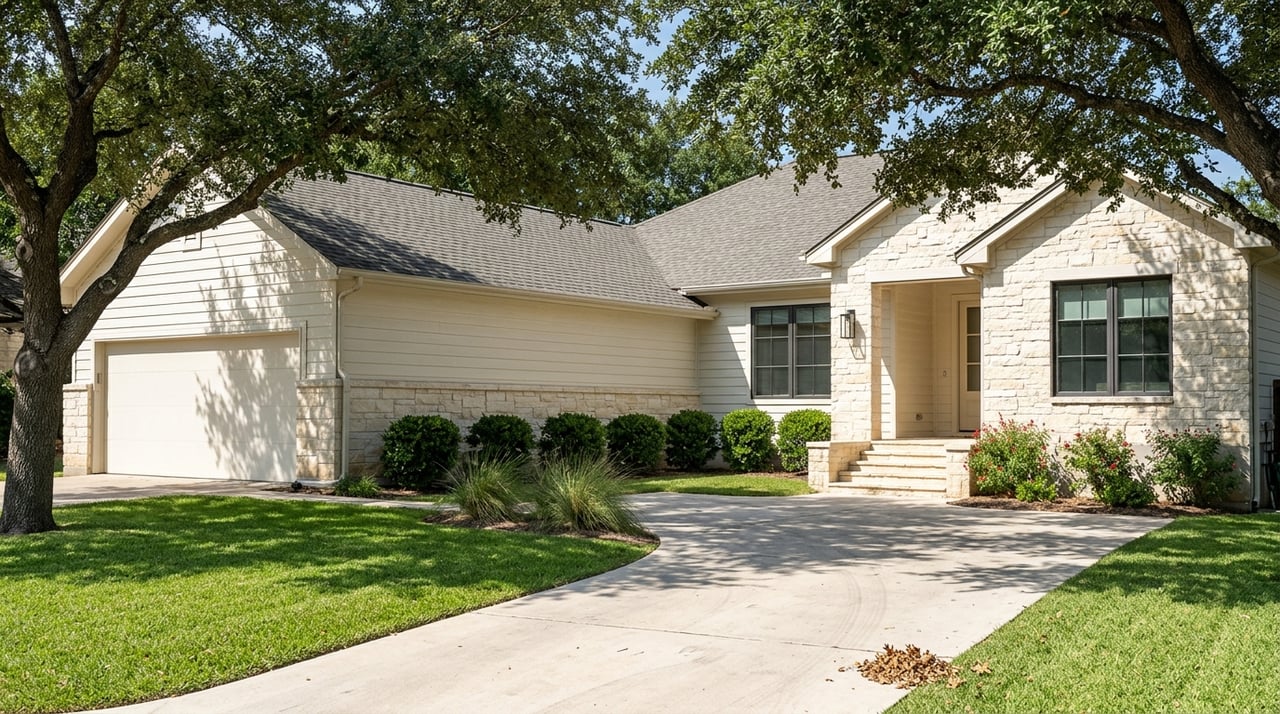
Trying to choose between Northwest Hills and West Lake Hills? On paper, both put you in West Austin with quick access to the city, established homes, and a strong sense of place. In reality, they serve very different priorities, and understanding those tradeoffs can save you time, money, and second-guessing. Let’s break down how these two areas compare so you can focus on the one that fits your lifestyle and goals best.
Northwest Hills vs. West Lake Hills at a Glance
If you want the shortest version, Northwest Hills usually appeals to buyers who value in-town convenience, housing variety, and everyday practicality. West Lake Hills usually appeals to buyers who value larger lots, more privacy, and an estate-style hill country setting.
That does not make one “better” than the other. It means your decision comes down to what matters most in daily life, from budget and commute flexibility to lot size, governance, and property upkeep.
Neighborhood Feel and Overall Setting
Northwest Hills feels more like in-town Austin
Northwest Hills sits within the larger Northwest Austin area bounded by RM 2222, Loop 360, U.S. 183, and MoPac. According to the Northwest Austin Civic Association, the broader area includes more than 6,200 single-family households and more than 5,000 apartments.
That scale gives Northwest Hills a more mixed, established, and lived-in Austin feel. It is not a single-product enclave. Instead, it feels like a mature residential area with a broader range of housing and everyday infrastructure woven into the neighborhood.
West Lake Hills feels smaller and more enclave-like
West Lake Hills is an incorporated city founded in 1953. The city describes it as about 2,560 acres, or roughly 4 square miles, with around 3,444 residents and about 40 miles of public streets.
That creates a different experience from Northwest Hills. West Lake Hills tends to feel more compact, more private, and more distinctly set apart, even though it is only a few miles west of downtown Austin.
Housing Stock and Lot Size
Northwest Hills offers more variety
Northwest Hills is a deeply established neighborhood, with many homes built from the 1950s through the 1990s. Homes.com reports a median year built of 1975 and notes a style mix that includes midcentury modern, ranch, contemporary, split-level, and new traditional homes.
If you like having options, this matters. Northwest Hills gives you a wider spread of home types and price points, including not only detached homes but also townhomes, condos, and apartments in the larger area.
West Lake Hills leans more estate-oriented
West Lake Hills has a more custom, land-driven housing profile. The city’s wildfire assessment describes development as primarily single-family residential, with homes ranging from modern architecture to mid-century ranch styles, often on half-acre to 5+ acre lots with mature native trees and setbacks from roadways.
Homes.com paints a similar picture, with hilltop homes, waterfront estates, private lots, and gated communities. In practical terms, West Lake Hills is where you are more likely to find scale, separation, and a more private homesite.
Price Expectations
Northwest Hills is typically the more accessible option
Homes.com lists Northwest Hills with an average value of about $1.01 million, a median sale price of $850,000 over the last 12 months, and an average of $377 per square foot.
That still places Northwest Hills firmly in a high-value part of the Austin market. But compared with West Lake Hills, it usually gives buyers more flexibility on entry point and home type.
West Lake Hills commands a much higher price tier
Homes.com currently lists West Lake Hills with an average value of about $2.09 million and around $769 per square foot. As a directional comparison, that puts West Lake Hills at roughly double Northwest Hills on average value.
The budget conversation, then, is not subtle. If West Lake Hills is on your list, you are generally paying a meaningful premium for larger lots, privacy, and the city’s more exclusive hill-country character.
Commute and Daily Logistics
Northwest Hills usually offers more route flexibility
Northwest Hills is closely tied to Austin’s arterial grid, with access shaped by MoPac, U.S. 183, Loop 360, and RM 2222. The Northwest Austin Civic Association notes that MoPac gave residents a more direct downtown commute than older North Lamar routes, and the association continues to track projects involving Mesa Drive, 183 North, and Loop 360.
For buyers, that suggests a commute story built around multiple corridors and ongoing infrastructure improvements. If your week includes varied drives across Austin, Northwest Hills often provides a more flexible base.
West Lake Hills offers access with more terrain constraints
West Lake Hills is also well positioned for access to central Austin. Homes.com places it about six miles from downtown Austin and notes that Westlake Drive and Bee Cave Road connect to Loop 360.
But the terrain is part of the tradeoff. The city’s wildfire assessment notes that some driveways are steep or narrow for large fire trucks and that one-way-in, one-way-out roads can become congested during evacuation. That does not define every property, but it does mean access can feel more constrained than in Northwest Hills.
Schools and Boundary Verification
Northwest Hills buyers should verify Austin ISD assignments
For Northwest Hills, school assignment questions should be handled at the parcel level. Austin ISD states that students living within district boundaries are guaranteed a seat at their zoned or assigned school, and attendance-area assignments are address-specific.
The key takeaway is simple: do not assume one feeder pattern applies to all of Northwest Hills. If schools are part of your search criteria, verify the exact property address through Austin ISD’s boundary tools.
West Lake Hills buyers should verify Eanes ISD assignments
West Lake Hills buyers should think in Eanes ISD terms. Eanes reports five elementary schools, two middle schools, one high school, and about 7,532 students.
The district’s Westlake High School boundary guidance tells buyers to confirm the property in TCAD and then use SchoolSearch to verify the zoned campus. As with Northwest Hills, the smart move is to confirm the exact address rather than rely on general neighborhood assumptions.
Taxes and Local Governance
The city and school tax pieces differ meaningfully
Taxes are one of the clearest tradeoffs between these two locations. Austin’s FY 2025-26 city property tax rate is $0.574017 per $100 of taxable value, while West Lake Hills’ FY 2025-26 adopted city rate is $0.176783.
On the school side, Austin ISD’s FY 2025-26 proposed rate is $0.9252, while Eanes ISD’s 2025-26 total rate is $0.8322. Using those published city and school rates, the combined difference is about $4,902 per $1 million of taxable value in favor of West Lake Hills and Eanes, before county and any special district levies are added.
Governance can shape the ownership experience
This is not only a tax conversation. Northwest Hills is part of Austin’s broader civic structure, while West Lake Hills is its own incorporated city.
For some buyers, that distinction matters. A smaller city can feel more distinct and self-contained, while a neighborhood within Austin may feel more integrated into the larger city framework.
Property Stewardship and Maintenance
Northwest Hills is usually simpler to manage
Because Northwest Hills has a more typical in-town residential form, many buyers find it easier to manage from a day-to-day ownership perspective. The area still has mature trees and hilly terrain in places, but the neighborhood’s overall layout is more conventional.
That can matter if you want a lock-and-leave friendly lifestyle, fewer site-specific challenges, or a home that feels easier to update over time.
West Lake Hills often asks more of the owner
West Lake Hills can deliver a beautiful natural setting, but that setting comes with added stewardship. The city’s wildfire assessment highlights mature trees, steep slopes, narrow driveways, and wildland-urban interface conditions as part of the local environment.
For some buyers, that is exactly the appeal. For others, it is a sign that the ownership experience may require more planning, maintenance, and attention to the land itself.
Which Buyers Tend to Prefer Each Area?
Northwest Hills may fit you better if you want:
- A more central, in-town Austin feel
- More housing variety
- A wider range of home styles and price points
- Better route flexibility for daily driving
- A neighborhood with more everyday infrastructure nearby
West Lake Hills may fit you better if you want:
- Larger lots and more privacy
- More estate-style or custom housing
- A compact west-Austin enclave feel
- A stronger emphasis on separation and scenery
- Lower published city and school tax rates at the same taxable value basis
Final Thoughts on the Tradeoffs
If your top priorities are convenience, flexibility, and a broader set of housing options, Northwest Hills often makes the stronger case. If your top priorities are privacy, lot size, and a more exclusive hill-country setting, West Lake Hills often rises to the top.
The right answer usually comes down to how you want to live day to day, not just what looks best in a listing photo. If you want help weighing specific streets, homesites, and off-market possibilities in West Austin, Bridget Ramey offers a private, highly tailored approach to finding the right fit.
FAQs
What is the main difference between Northwest Hills and West Lake Hills?
- Northwest Hills generally offers more in-town convenience and housing variety, while West Lake Hills generally offers larger lots, more privacy, and a more estate-oriented setting.
Is West Lake Hills more expensive than Northwest Hills?
- Yes. Homes.com’s current neighborhood estimates show West Lake Hills at roughly double Northwest Hills on average value, making it a meaningfully higher price tier.
Which area has easier commuting in West Austin?
- Northwest Hills usually has more route flexibility because of its access to MoPac, U.S. 183, Loop 360, and RM 2222, while West Lake Hills can be more terrain-constrained.
Are schools assigned the same way in Northwest Hills and West Lake Hills?
- No. Northwest Hills buyers should verify the exact property through Austin ISD tools, while West Lake Hills buyers should confirm the property through TCAD and Eanes ISD SchoolSearch.
Are taxes lower in West Lake Hills than in Northwest Hills?
- Based on the published city and school rates cited in the research, the combined city plus school-rate difference is about $4,902 per $1 million of taxable value in favor of West Lake Hills and Eanes, before county and special district levies.
Is West Lake Hills harder to maintain than Northwest Hills?
- It can be. West Lake Hills properties often come with steeper slopes, mature trees, and other site conditions that may require more ongoing property stewardship.