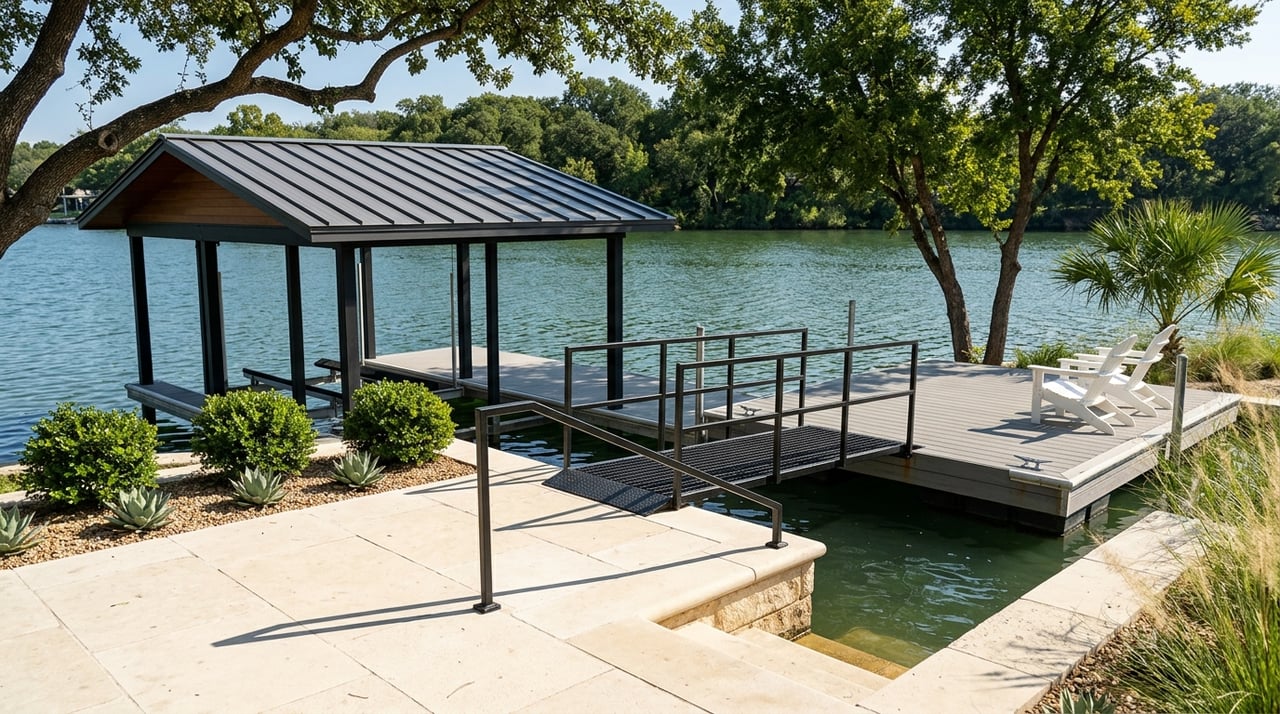
What looks magical from the water can feel very different once you live with it every day. On Lake Austin, your boating routine, dock setup, and shoreline conditions can shape how often you use the lake, how much upkeep you take on, and how well a property fits your lifestyle. If you are weighing a waterfront purchase in Travis County, this guide will help you think beyond the view and focus on how the property will actually live. Let’s dive in.
Lake Austin Works Differently
Lake Austin is a narrow, constant-level reservoir between Lake Travis and Lady Bird Lake, and the City of Austin manages it as both a recreation space and a drinking-water source. That mix makes waterfront ownership here feel more hands-on than many buyers expect.
LCRA describes Lake Austin as a pass-through lake with no extra flood-storage capacity. The lake spans about 1,830 acres, stretches 20.25 miles, and is maintained at a target operating range of 491.8 to 492.8 feet msl. In practical terms, that means the waterway is highly used, closely watched, and shaped by local operating realities.
Because the lake is relatively small and lined with dense shoreline development, the experience often feels more urban and neighbor-aware than resort-like. A beautiful waterfront home can still be the right fit, but the details of access and maintenance matter more here than they do on larger, less built-up lakes.
Start With How You’ll Use the Water
Before you focus on architecture, finishes, or even lot size, it helps to decide what kind of lake lifestyle you actually want. On Lake Austin, the most useful distinction is often not price point. It is whether you want a daily boating base, a weekend entertaining property, or a home where the water is mostly part of the view.
If you expect to use a boat often, convenience becomes a major quality-of-life factor. Lake Austin has no curfew, so buyers who like after-work boat rides or evening returns may place real value on easy dock access and a simple trip from house to water.
If your priority is hosting, the dock still matters, but guest flow may matter just as much. A property that works well for entertaining may need easier transitions between indoor living spaces, outdoor terraces, and the shoreline.
If you are more view-driven, you may be happier with a home where the dock is a secondary amenity rather than a daily operating requirement. In that case, lower shoreline complexity may be more appealing than maximizing every boating feature.
Boat Access Is More Than a Bonus
On Lake Austin, public access is limited. Texas Parks and Wildlife notes that almost all shoreline is privately owned, and public boat access is concentrated at a small number of ramps and access points, including Walsh Boat Landing, Loop 360, Emma Long Park, and Mary Quinlan Park.
That is why a private dock can be such a meaningful differentiator. It is not just about prestige. It can change how easy it is to launch, store, return, and make the lake part of your regular routine.
For some buyers, that private access is the whole point of being on the water. For others, it is useful but not essential. The key is knowing whether the boat will be part of your weekly life or mostly there for special weekends and guests.
Traffic Patterns Matter on the Water
Not every stretch of Lake Austin feels the same. Some areas feel calmer and more residential, while others experience heavier traffic and a busier pace.
The City of Austin created slow-no-wake zones around the Pennybacker Bridge and just north of Tom Miller Dam near Oyster Landing Marina and Walsh Boat Landing because those areas are especially crowded and collision-prone. That does not make those locations good or bad. It simply means your on-the-water experience may differ a lot depending on where the property sits.
If you want a quieter atmosphere, a protected setting may feel more comfortable. If you care more about quick boat movement and active lake energy, you may be comfortable with a busier section. Either way, it is smart to evaluate a property based on the kind of movement and activity you want around you.
Dock Design Shapes Daily Life
A dock is not one single thing. Under Austin’s waterfront rules, a dock can include a wharf, pier, float, floating dock, island, boat dock, boat slip, boat lift, or stationary platform. Shoreline access structures can also include stairs, trams, lifts, and inclined elevators.
That matters because the trip from the house to the water can feel effortless on one lot and highly vertical on another. A flat lot may offer a simple walk to the dock. A steeper homesite may require terraces, stairs, or mechanical access to make the shoreline practical.
This is where buyers often discover that two homes with similar frontage can live very differently. The view may be equally striking, but the ease of getting to the lake can change whether you use it every day or only occasionally.
Lot Shape Can Matter as Much as Frontage
On Lake Austin, more frontage does not automatically mean an easier property to enjoy. The shape of the lot, the grade, and the relationship between the house and shoreline can all be just as important.
The City of Austin notes that Lake Austin District properties can face more restrictive rules, including limits on development on land with grades over 35 percent and shoreline setback requirements. That helps explain why some waterfront homes feel terraced, compact, or more vertical instead of opening to a broad flat lawn.
If a large lawn by the water is important to you, that should be a specific part of your search. If you are comfortable with a hillside setting and value layered terraces, elevated views, and architectural drama, a more vertical site may be a strong fit.
Dock Ownership Comes With Responsibilities
A private dock is valuable, but it also becomes part of the property’s long-term operating reality. The City of Austin requires boat-dock registration and proper addressing for docks on Lake Austin, and the city says this supports visibility for emergency responders.
That requirement is a helpful reminder that a dock is not just a lifestyle feature. It is also an asset that needs to be documented, maintained, and understood as part of overall ownership.
When you evaluate a property, it is worth treating the dock and shoreline improvements with the same seriousness you would give the house itself. Ease of use, condition, and compliance can all influence the ownership experience.
Shoreline Maintenance Is Part of the Equation
One of the biggest surprises for some buyers is that shoreline appearance can change over time. Lake Austin is actively monitored, and the City of Austin reports that hydrilla remains an active issue, with dense growth in some stretches and backwater coves.
The city also notes that herbicides are not allowed on Lake Austin. Instead, current management emphasizes grass carp, mechanical removal, and shoreline landscaping that helps buffer nutrient runoff.
For you as a buyer, that means one shoreline may feel clearer and easier for swimming or boating, while another may have more vegetation or changing conditions through the year. A lakefront property is not static, and the waterfront edge deserves close attention during your decision-making process.
Swimming, Boating, and Views May Compete
Many buyers want everything at once: open-water access, an easy swim zone, a protected cove, and minimal maintenance. On Lake Austin, those goals do not always line up perfectly.
The city’s guidance notes that temporary, localized relief near docks may come from mechanical removal, but lakewide control is not feasible. So the best property for you often depends on which trade-offs you are willing to make.
If open-water boating is the priority, you may accept more activity and more exposure. If cleaner swimming conditions matter most, you may focus differently. If you want a lower-maintenance shoreline, you may prefer a property where natural vegetation feels more acceptable within your lifestyle expectations.
Three Useful Buyer Profiles
A simple way to narrow Lake Austin options is to match homes to your actual use case. Most waterfront buyers in this market tend to fall into one of three broad categories.
Low-Maintenance and Lock-and-Leave
This buyer often wants the lake setting without making boating the center of daily life. A smaller waterfront footprint, fewer shoreline interventions, and a lower-maintenance setup can be more appealing than maximizing every dock feature.
This approach can work well if you value the atmosphere of Lake Austin but do not want shoreline ownership to feel like a second job. In many cases, the view and setting do more of the heavy lifting than the dock.
Boat-First and Entertaining-First
This buyer wants the home to function as an active waterfront base. Private dock access, easy transitions to the water, and strong guest flow matter a great deal.
This lifestyle usually comes with a higher tolerance for upkeep. If boating, hosting, and regular time on the water are central to how you want to live, those trade-offs may be well worth it.
View-First and Lifestyle-First
This buyer is drawn to terraces, pools, outdoor rooms, and the visual impact of the lake. The dock may still matter, but it is more an added amenity than the core purpose of ownership.
For this profile, the right property may be the one that delivers privacy, scenery, and a polished outdoor living experience without requiring constant waterfront use. That can be a smart way to enjoy Lake Austin if your lifestyle is centered more on setting than boat traffic.
What to Ask Before You Buy
Before making an offer on a Lake Austin property, it helps to ask a few direct questions about daily use. The right answers depend on your priorities, not someone else’s idea of the ideal waterfront home.
- How often will you realistically use a boat?
- Do you want the property to support daily boating, weekend entertaining, or mostly scenic living?
- Is flat shoreline access important, or are you comfortable with a terraced or vertical lot?
- How much ongoing dock, shoreline, and vegetation maintenance feels reasonable to you?
- Would you rather be in a calmer cove, on more open water, or somewhere that balances both?
These questions can quickly clarify whether a home fits your lifestyle in theory or in practice. On Lake Austin, that difference matters.
If you are sorting through waterfront options in Travis County, a well-matched property is rarely just about the prettiest view. It is about choosing the right relationship to the water, the dock, and the shoreline so the home supports the way you actually want to live. For a discreet, highly informed search tailored to Lake Austin, schedule a private consultation with Bridget Ramey.
FAQs
What makes Lake Austin different from other waterfront markets in Travis County?
- Lake Austin is a narrow, constant-level reservoir that the City of Austin manages as both a recreation space and a drinking-water source, so boating, shoreline use, and maintenance can feel more consequential than they do on many other lakes.
Why is a private dock such a big factor on Lake Austin?
- Because almost all shoreline around Lake Austin is privately owned and public boat access is limited to a handful of ramps and access points, a private dock can make daily boating much easier.
How do Lake Austin lot shapes affect waterfront living?
- Lot shape, grade, and access can change how a home functions, since some properties offer a simple walk to the water while others require stairs, terraces, trams, lifts, or other shoreline access structures.
Are some parts of Lake Austin busier for boat traffic?
- Yes. The City of Austin created slow-no-wake zones around the Pennybacker Bridge and just north of Tom Miller Dam near Oyster Landing Marina and Walsh Boat Landing because those areas are especially crowded and collision-prone.
What should buyers know about shoreline vegetation on Lake Austin?
- The City of Austin says hydrilla remains an active issue in some stretches and backwater coves, and herbicides are not allowed on Lake Austin, so shoreline appearance and boating or swimming comfort can vary by property and over time.
What kind of Lake Austin home is best for a lower-maintenance lifestyle?
- Buyers seeking a lower-maintenance setup often prefer a smaller waterfront footprint, fewer shoreline interventions, and a home where the lake is more about views and setting than daily boat use.