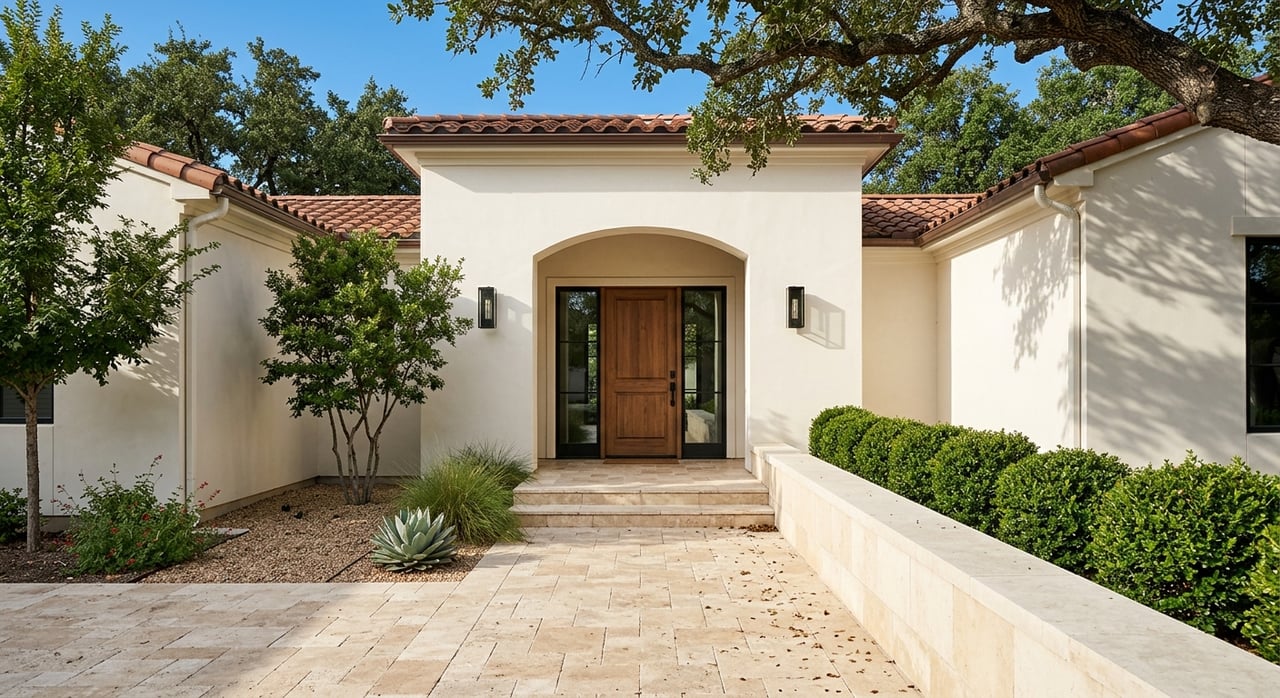
If you are searching Barton Creek gated communities, it is easy to assume every address works the same way. In reality, Barton Creek often functions more like a collection of distinct enclaves, each with its own rules, fees, gate procedures, and architectural review process. If you want to buy with confidence, it helps to know what is shared across the area and what can change from one community to the next. Let’s dive in.
Barton Creek is a network of enclaves
One of the most important things to understand about Barton Creek is that it is not a single, uniform neighborhood. Barton Creek North describes itself as a 2,500-acre master-planned community in West Austin with a 655-member master property owners association made up of eleven separate exclusive gated communities.
That structure shapes how ownership feels on the ground. Buyers often search by enclave name first, not by the master association, because the experience can vary meaningfully from one section to another. Names that appear in current Barton Creek property-tour materials include Amarra Drive, Canyons, Calera, Escala, Governor's Hill, Mirador, North Rim, The Estates, The Fairways, The Foothills, The Ridge, The Terraces, Wimberly Lane, Verano Drive, WatersMark, and Woods I-III.
HOA layers can affect your costs
In Barton Creek, a property may belong to more than one association. The master association handles common-area maintenance, irrigation, architectural issues, and improvement oversight, while each subassociation may handle its own landscaping, mailboxes, gates, lighting, and sometimes roadways.
For you as a buyer, that can mean layered ownership costs instead of one simple fee. A listing may involve a master association assessment plus a subassociation assessment, and in some cases there may be another layer depending on the property type.
That is why reviewing the full resale package matters. You want to confirm exactly which association or associations apply to the home and what each fee covers before you write an offer.
Gate policies are not always uniform
Many buyers are drawn to Barton Creek for the privacy and structure of gated living. Still, gate operations are not managed the same way across every enclave.
Barton Creek North states that gate maintenance and temporary access codes are handled by each individual subassociation manager. In practice, that means visitor access, remotes, service entry, and day-to-day gate procedures can differ depending on the community.
If gated access is a major part of your buying decision, ask specific questions early. You will want to know who manages the gate, how guest access works, and whether there are any unique procedures for vendors, deliveries, or short-term visitors.
Architectural review is a real part of ownership
In luxury communities, exterior consistency and design standards often matter to owners. Barton Creek is no exception.
Barton Creek North says improvements, additions, and modifications generally must be presented for approval, and the typical review timeline is about 30 to 45 days after a complete submittal. Fees and deposits may apply, and incomplete packets are the most common reason for delays.
That timeline is worth taking seriously if you plan to renovate soon after closing. If you are thinking about a pool, exterior repainting, new landscaping, fencing, lighting, or other visible changes, it is smart to understand the approval path before you buy.
Not every enclave uses the same review path
Another key detail is that Barton Creek's architectural system is not one-size-fits-all. The master architectural committee oversees several communities, including The Woods I, II, and III, The Foothills, Governor's Hill, North Rim/South Rim, The Ridge, The Terraces, and Wimberly Lane Phase I.
The Fairways and WatersMark have their own architectural review structure, and Wimberly Lane Phase II is also separately managed. So while architectural review is a common theme in Barton Creek, the actual authority may depend on the address.
That is one reason local guidance matters in this market. Two homes that appear close together can still follow different approval procedures.
Texas law gives owners important visibility
HOA communities in Texas operate within state law, and that matters in Barton Creek. Under Texas Property Code Chapter 209, regular and special board meetings must be open to owners, subject to limited executive-session exceptions.
The law also requires associations to make books and records, including financial records, open and reasonably available for inspection by owners or their designated agents. If an HOA can levy fines, it must adopt an enforcement policy that includes violation categories, a fine schedule, and hearing information.
For you, that means due diligence is not just about dues. It is also about reviewing governance, financials, and enforcement practices so you can understand how the community operates in real terms.
Security upgrades still go through standards
Security is often part of the appeal of gated ownership, but not every decision rests entirely with the HOA. Texas Property Code Chapter 202 limits some restrictive covenants that would ban security cameras, motion detectors, or perimeter fences.
At the same time, communities may still apply architectural standards and approval processes to how those features are installed. If you expect to add or modify security features, confirm both the legal framework and the architectural review requirements tied to that specific enclave.
Club access is separate from HOA living
One of the biggest misconceptions in Barton Creek is that buying in the area automatically means full club privileges. In practice, club access is a separate question.
Barton Creek Country Club lists several membership types, including Full Golf, Golf in Waiting, Lakeside Golf, Racquet, Social, and Lakeside Social. The membership structure is tiered, which means access is not simply all-or-nothing.
That is why you should verify club status independently from HOA dues. Unless the resale package clearly says otherwise, do not assume membership is included with the home.
Golf convenience varies by lifestyle
For buyers who care about golf, the details matter. Barton Creek Country Club markets four championship courses: Fazio Foothills, Fazio Canyons, Coore Crenshaw Cliffside, and Palmer Lakeside, along with racquet sports, fitness, pools, dining, kids' programming, and resort access.
But the golf geography is not fully centralized. Palmer Lakeside is in Spicewood, about 40 minutes from the main clubhouse, and Full Golf members get access to both clubhouses.
That can shape how useful the membership feels to you day to day. If you want frequent, convenient access, your ideal address may depend as much on your routine as on the club brochure.
Some golf-cart privileges are address-specific
There is another practical layer for golf-focused buyers. Barton Creek Country Club allows personal golf carts only for members who own property in approved communities, currently listed as The Ridge, The Fairways, Amarra, The Canyons, Woods II, and Barton Creek Lakeside, and only after approval from the Director of Golf.
This rule is not the same as an HOA map, but it does suggest that some locations are more directly connected to golf operations than others. If that convenience matters to you, ask about it before moving forward.
Budget changes can affect future dues
Luxury gated communities often have meaningful operating costs, and Barton Creek is no different. Late 2024 Barton Creek North board minutes discussed potential 2025 assessment increases tied to security patrol services, vendor cost increases, and safety installations.
The board also approved a tree-care budget increase in 2024. For buyers, that is a reminder that dues are not static just because a community is established.
Before you commit, review the current budget, reserve levels, and any history of special assessments. A well-informed purchase is not only about the home itself. It is also about the ongoing cost of maintaining the lifestyle and infrastructure around it.
County infrastructure still plays a role
Even in a gated setting, not every infrastructure issue is controlled internally. Barton Creek North states that it maintains landscape areas along Barton Creek Boulevard and Lost Creek Boulevard through an agreement with Travis County, while Travis County remains the governing authority for roadways, guardrails, and the bridge.
That is a helpful reminder that a gated address can still rely on county systems for certain infrastructure. It is one more reason to look at the broader ownership picture, not just the front gate.
Questions to ask before you write an offer
When you narrow in on a Barton Creek property, your due diligence should be specific to that address. A clear set of questions can help you avoid surprises.
Consider asking:
- Which HOA or HOAs apply to this property?
- Is there a master association, subassociation, condo association, or a combination?
- Which group approves exterior changes?
- How long does the approval process usually take?
- Are gate codes, remotes, and visitor access handled by the master association or the subassociation?
- What are the current dues and reserve levels?
- Have there been any recent or pending special assessments?
- Is club access automatic, optional, waitlisted, or tiered by membership category?
- If golf matters, does this address qualify for any special cart or course privileges?
Why local guidance matters in Barton Creek
Barton Creek is one of those markets where broad assumptions can lead to costly misunderstandings. Two homes may both sit behind gates, but their dues, review procedures, gate operations, and club relationship can be very different.
If you want a home that fits your priorities, whether that means architectural flexibility, golf convenience, privacy, or a simpler ownership structure, the details matter. That is where a tailored, local approach makes a difference.
If you are considering buying or selling in Barton Creek and want a clear read on how a specific enclave operates, Bridget Ramey offers discreet, highly personalized guidance backed by deep West Austin market knowledge.
FAQs
What makes Barton Creek gated communities different from each other?
- Barton Creek includes multiple enclaves and associations, so costs, gate procedures, architectural review, and club relationships can vary by address.
Do Barton Creek homes usually have more than one HOA fee?
- Some properties do, because the master association and a subassociation may each have separate responsibilities and assessments.
How long does Barton Creek architectural approval usually take?
- Barton Creek North says the process typically takes about 30 to 45 days after a complete submittal, though incomplete packets can cause delays.
Does buying in Barton Creek automatically include country club membership?
- Not necessarily. Club access is tiered by membership category and should be verified separately from HOA dues unless the resale package states otherwise.
Who handles gate access in Barton Creek gated communities?
- Barton Creek North says gate maintenance and temporary access codes are handled by each individual subassociation manager, so procedures are not uniform across all enclaves.
What should buyers review before making an offer in Barton Creek?
- You should confirm which associations apply, what the dues cover, who handles architectural approval and gate access, whether any assessments are pending, and how club membership works for that property.