Stroll down a shaded block in Pemberton Heights and you can read Austin’s history in the rooftops. Steep gables, balanced brick facades, low slung mid‑century lines and fresh contemporary forms all share the street. If you are buying or selling here, understanding style is not just academic. It changes how buyers see value and how you plan updates. This guide breaks down the most common styles, what features matter, and the practical steps that protect your investment. Let’s dive in.
Why style matters in Pemberton Heights
Pemberton Heights is one of central Austin’s early residential neighborhoods. Many homes date to the first half of the 20th century, so you see a strong mix of Tudor Revival and Colonial Revival alongside mid‑century and recent infill. That blend, plus a mature canopy and consistent setbacks, creates the streetscape buyers prize.
Style cues tell a story about craftsmanship, materials, and how a house meets the street. They also influence how you modernize without losing curb appeal. Before planning changes, verify any historic overlays or design standards with the City of Austin and the Pemberton Heights Neighborhood Association so you know what is allowed.
Demand for character homes close to amenities remains a key driver in central Austin. In this setting, authenticity, condition, and smart modernization are what move the market.
The hallmark styles you will see
Tudor Revival
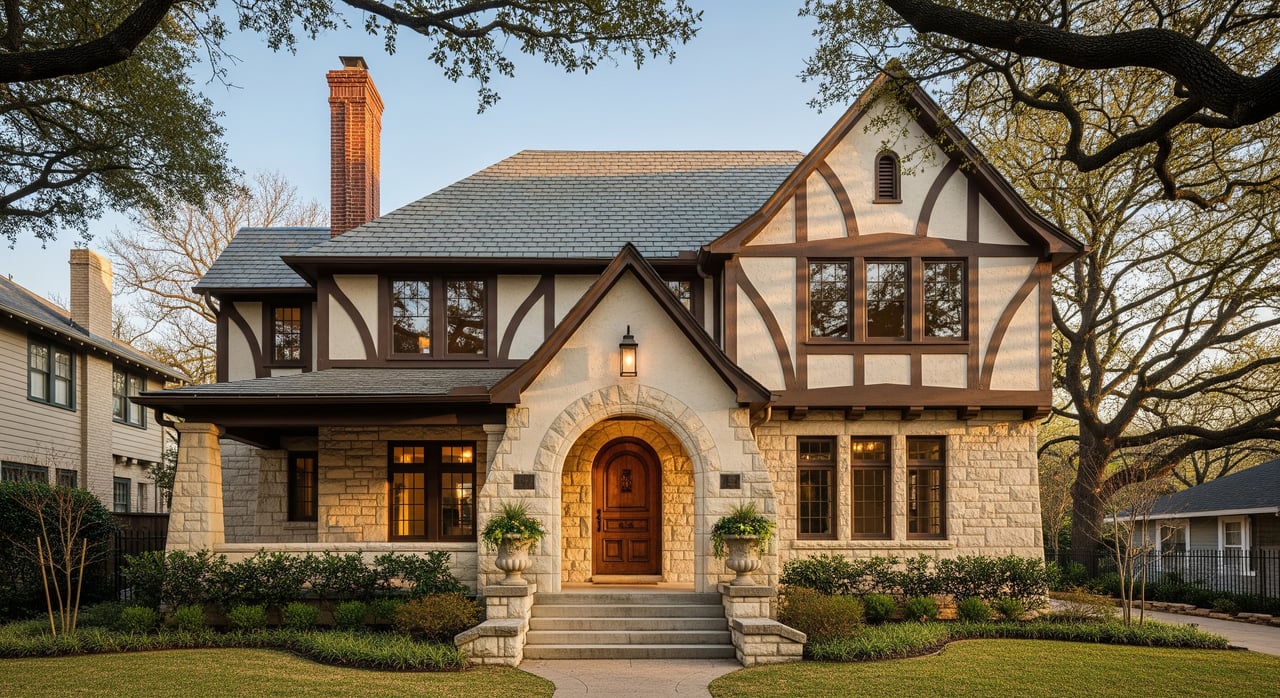
Tudor Revival homes in Pemberton Heights largely date from the 1920s and 1930s. You will recognize steeply pitched gables, asymmetrical facades and varied rooflines, sometimes with a small tower or bay and a prominent chimney.
Common materials include half‑timbering with stucco infill, brick or stone bases, tall narrow windows that may feature leaded glass, and arched doorways. Interiors often show timber beams, plaster walls, casement windows, and crafted fireplace surrounds.
Preservation tends to focus on visible historic fabric. Original windows, brick and stone, and decorative chimneys are character defining. Upgrades usually target systems, insulation, and kitchens or baths in ways that avoid removing historic materials. Oversized modern garage doors or removing half‑timbering can undercut value on a Tudor street.
Value signals to watch: intact masonry, properly maintained steep roofs, working original or historically compatible windows, and entries that keep their original scale and rhythm.
Colonial Revival
Colonial Revival, including Georgian and Classical variants, runs from the early to mid‑20th century. The look is symmetrical and composed. Think two stories with a centered entry, balanced window placement, and a rectangular massing that reads calm and orderly.
Materials often include brick or painted clapboard, multi‑pane double‑hung windows, columned porches or small porticos, and classical cornices. Inside, you may find formal entry halls, central staircases, proportioned rooms, and traditional millwork.
Modernization works best when it preserves the window rhythm, entry details, and masonry. You can open floor plans thoughtfully while keeping the façade’s symmetry. Original brickwork, functioning porches, and preserved interior millwork are commonly rewarded when you go to market.
Mid‑Century Modern and Ranch
Post‑war homes from the 1940s through the 1960s appear in pockets and as later replacements. They emphasize horizontal lines, low‑sloped roofs, and a strong connection to the yard and patio.
You will see brick and wood siding, large picture windows, and minimal ornament. Interiors often feature open living and dining, built‑ins, and an indoor‑outdoor flow that still feels current.
Buyers respond when the original modern lines remain visible. Energy and systems upgrades are smart, but replacing distinctive fenestration with traditional windows or heavy trim can dilute the look. Intact window walls, quality woodwork, and preserved patios or terraces carry weight with this audience.
Contemporary infill
Recent infill ranges widely in Pemberton Heights. Some new builds are scaled to match neighbors with a “neo‑traditional” feel. Others are boxier with larger glazing and metal accents.
Form and massing vary from compatible scale to taller, multi‑story volumes that push setbacks to maximize interior area. Interiors usually deliver open plans, high‑end systems, and contemporary finishes.
Resale appeal improves when infill respects the street’s rhythm of heights, roof pitches, and setbacks. Buyers may pay a premium for modern systems and space, but an out‑of‑scale façade can face headwinds on a traditional block. Compatibility with neighboring scale and canopy, quality finishes, and permitted additions that retain an original street face tend to perform best.
What drives value on these streets
- Authentic materials and craftsmanship. Brick and stone laid right, original windows in good repair, and well‑made millwork read as real and are prized by buyers of character homes.
- Scale, massing, and setbacks. A house that sits comfortably in the block’s rhythm feels natural. Over‑tall or bulky infill can struggle in a setting rooted in early 20th‑century proportions.
- Porches and entries. Human‑scaled entries and active front porches increase curb appeal. Large street‑facing garages often reduce it.
- Mature trees and landscaping. Canopy and consistent front‑yard patterns elevate the whole street and support value perception.
- Modern comfort. Historic charm paired with updated HVAC, plumbing, electrical, insulation, and efficient windows keeps buyer interest high. Deferred systems can force price adjustments.
- Lot size and usable outdoor space. Larger lots and private patios or terraces command premiums in close‑in neighborhoods.
Preservation or modernization
Preservation often stabilizes or increases values because it protects the streetscape character that draws buyers to Pemberton Heights. The premium varies by market, but here the neighborhood context supports homes that keep their visible fabric intact.
There are tradeoffs. Highly original homes may require near‑term investment, which some buyers factor into offers. On the other side, heavy remodels that erase character can reduce appeal with the very audience that values this neighborhood.
Contemporary infill can capture higher price per square foot when it offers scale and modern systems, as long as it fits the block. Out‑of‑scale designs can slow resale velocity on traditional streets.
Appraisals, permits, and financing
Appraisers will focus on real buyer behavior through comparable sales, not style labels alone. Condition, lot, location on the block, and systems will influence value alongside architecture.
If you plan exterior changes, check City of Austin permitting and any historic or neighborhood design standards before you design. For buyers considering updates, renovation loan options may apply, but programs have rules and historic status can affect what is allowed. Confirm specifics for the property and your scope.
What to look for on a tour
For buyers
- Define the character you want to keep. Note windows, millwork, porches, masonry, and rooflines that matter to you and make them part of your non‑negotiables.
- Ask for documentation. Request original plans if available, permits for past work, and maintenance records for roofing, drainage, and foundations.
- Evaluate systems and envelope. Have an inspector experienced with older homes assess HVAC, plumbing, electrical, insulation, and window condition.
- Plan the right addition. Favor rear or context‑sensitive additions that preserve the street‑visible façade and respect scale.
- Verify rules early. Determine if the property falls under any local historic overlays or design review.
For sellers
- Protect the first impression. Preserve visible elements that signal authenticity, including porches, entries, and masonry. Landscaping, paint, and lighting can deliver strong ROI.
- Highlight provenance. Document original features and quality updates in your listing to reach buyers who value authenticity.
- Modernize with care. Choose reversible or minimally invasive improvements for street‑facing elements. When replacing windows, use historically compatible models.
- Communicate compatibility. If you added space, show how the design aligns with the block’s rhythm, canopy, and setbacks.
- Reduce uncertainty. Provide scope outlines or cost ranges for likely post‑purchase updates so buyers can plan with confidence.
The right team
- Bring in specialists. Seek contractors, preservation architects, and inspectors who understand historic fabric and Austin permitting.
- Use local expertise. Work with an agent who knows Pemberton Heights and how to position character homes to the right buyer segment.
Your next step
If you are drawn to steep Tudor gables, classic brick symmetry, glassy mid‑century lines, or a modern build that fits the block, a style‑aligned plan will save you time and money. Share your preferred architectural styles, timing, and renovation tolerance, and we will assemble a short list of active and upcoming homes that match. If you are selling, we can prepare a sample listing plan that compares a preservation‑forward refresh with a targeted modernization or rear addition, including likely buyer audiences and positioning.
For a private, tailored plan built around your goals in Pemberton Heights, reach out to Bridget Ramey. We will start by confirming any regulatory constraints, then outline a clear path to your best result.
FAQs
Are Pemberton Heights homes protected by historic rules?
- Some properties in central Austin are subject to local historic overlays or design standards. Verify the current status and process with the City of Austin and the Pemberton Heights Neighborhood Association.
Do original windows increase value in Pemberton Heights?
- Many buyers value original windows for authenticity, especially in Tudor or Colonial Revival homes. Energy concerns matter too, and historically compatible, efficient replacements are a common compromise.
Will a contemporary infill hurt my resale?
- It depends on fit. Context‑sensitive designs that respect scale, setbacks, and canopy typically perform well. Out‑of‑scale replacements can reduce appeal on traditionally styled blocks.
How important is the streetscape to buyers here?
- Very important. Setbacks, porch rhythm, rooflines, and mature trees shape curb appeal and perceived desirability at both the house and block level.
Who should I consult before buying or renovating?
- Engage a home inspector with historic experience, a preservation architect or designer familiar with Austin rules, and a local agent who understands Pemberton Heights and character‑home marketing.